One of the most persistent startup beliefs is that every serious founder needs a co-founder.
Browse startup communities long enough and you'll see the same advice repeated everywhere. Find a technical co-founder. Find a business co-founder. Find someone who complements your skills. Find someone to share the journey.
It's not bad advice.
It's just far less universally true than people think.
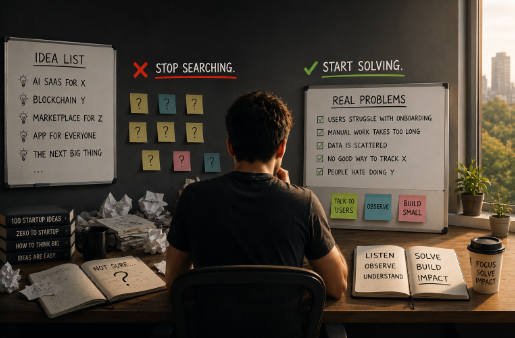
A surprising number of aspiring founders spend more time searching for co-founders than talking to customers. They treat the lack of a co-founder as the thing preventing them from starting, when in reality it often becomes a convenient explanation for why they haven't begun.
The startup isn't stalled because there's no co-founder. It's stalled because nothing has been tested.
The World Has Changed
Twenty years ago, building a software company required a larger team from the beginning. Infrastructure was expensive, distribution was difficult, and development often required specialized expertise. Having a co-founder wasn't merely helpful; it was often necessary.
Today, the economics look very different.
Cloud platforms have eliminated much of the operational burden. Design tools have become dramatically more accessible. AI can accelerate research, writing, coding, customer support, and countless other tasks. A single person can build and launch products that previously required an entire team.
This doesn't mean solo founders have an advantage over teams. It means the minimum viable team has become much smaller than many people assume.
The question is no longer, "Can one person build this?" The more useful question is, "Does this problem require more than one person right now?"
In many cases, the answer is no.
The Hidden Cost of Getting the Wrong Co-Founder
Startup advice often emphasizes the benefits of co-founders while glossing over the risks.
A great co-founder can accelerate progress, provide emotional support, challenge bad decisions, and bring complementary skills. A bad co-founder can create years of frustration, conflict, and distraction. The difference between the two outcomes is enormous, yet many founders approach co-founder selection with less scrutiny than they would apply to hiring an employee.
That's a strange asymmetry when you consider what's being exchanged.
A co-founder isn't a contractor. They're not an employee. They're often receiving a substantial percentage of the company and significant influence over its future direction. Choosing one after a handful of coffee chats is roughly equivalent to getting married because someone seemed interesting on a few dates.
The startup world has normalized an unusually high-risk decision.
One of the least discussed startup mistakes is giving away meaningful equity before proving there's even a business worth building.
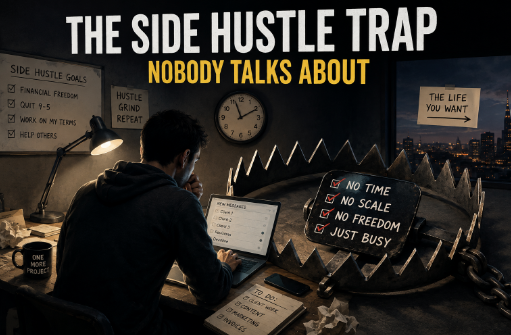
For people building alongside a full-time job, The Side Hustle Trap Nobody Talks About is also worth reading.
Most Early-Stage Problems Aren't Team Problems
Founders frequently assume they need a co-founder because they feel stuck.
Sometimes that's true.
More often, they're facing problems that a co-founder wouldn't actually solve.
Consider a few common situations:
- You haven't spoken to customers.
- You don't know what to build.
- Nobody is using the product.
- You aren't sure who the target market is.
- You haven't attempted to sell anything.
None of those problems are caused by a lack of co-founders.
They're validation problems.
Adding another person may create activity, but activity and progress are not the same thing. Two people can spend six months building the wrong product just as effectively as one person can.
A surprising amount of startup momentum comes from clarity rather than manpower.
Why People Really Want Co-Founders
This is where the conversation becomes slightly uncomfortable.
Many founders don't actually want a co-founder because they need additional skills. They want a co-founder because they're afraid of doing it alone.
That's understandable.
Starting something from scratch can be lonely. There's uncertainty, self-doubt, and the constant possibility that nobody cares about what you're building. Sharing that burden with another person feels safer.
But emotional support and business partnerships are not the same thing.
You can find accountability through founder communities. You can get feedback from customers. You can build relationships with mentors and peers. None of those arrangements require giving away ownership of a company that may become valuable later.
The bigger challenge for most founders isn't team size—it's finding customers, which is why The First 100 Users Are Harder Than the First $1,000.
The desire for companionship is real. It just doesn't always require a co-founder-shaped solution.

When You Probably Do Need One
Despite everything above, there are situations where finding a co-founder makes complete sense.
If you're entering a highly specialized industry and lack critical domain expertise, a co-founder may dramatically increase your chances of success. The same applies when the product genuinely requires skills you cannot realistically acquire in a reasonable timeframe.
A co-founder can also be valuable when the partnership emerges naturally rather than strategically. Some of the strongest founding teams start because two people worked together, solved problems together, and gradually discovered they enjoyed building things together.
Notice what's absent from that description.
Neither person was desperately searching for a co-founder.
The partnership emerged from shared experience and mutual trust.
Those relationships tend to be more durable because they're built on evidence rather than aspiration.
Start Before You Recruit
The best argument for starting alone is not that solo founders are better.
It's that early action creates information.
Once you've talked to customers, validated demand, built a prototype, or generated revenue, you gain a clearer understanding of what the business actually needs. Sometimes that reveals a genuine need for a co-founder. Sometimes it reveals a need for contractors, employees, advisors, or simply more customer conversations.
Without that information, co-founder discussions are largely hypothetical.
Many businesses can be validated long before a second founder becomes necessary, which is one reason I wrote If I Had $5,000 and Six Months, Here's the Startup I'd Build
Many founders treat co-founders as a prerequisite for starting. In practice, they're often a consequence of making progress. The act of building something attracts collaborators far more effectively than the act of searching for them.
That's why the most productive path is often the simplest one: start with the resources you already have, learn as much as possible, and let reality tell you whether another founder belongs on the journey.
You may eventually need a co-founder. You may even find an exceptional one. But until the business itself proves that need, waiting for the perfect partner is often just another form of waiting.