Most advice about overthinking assumes the problem is simple: you're thinking too much.
That sounds reasonable until you look closely at what overthinking actually feels like.
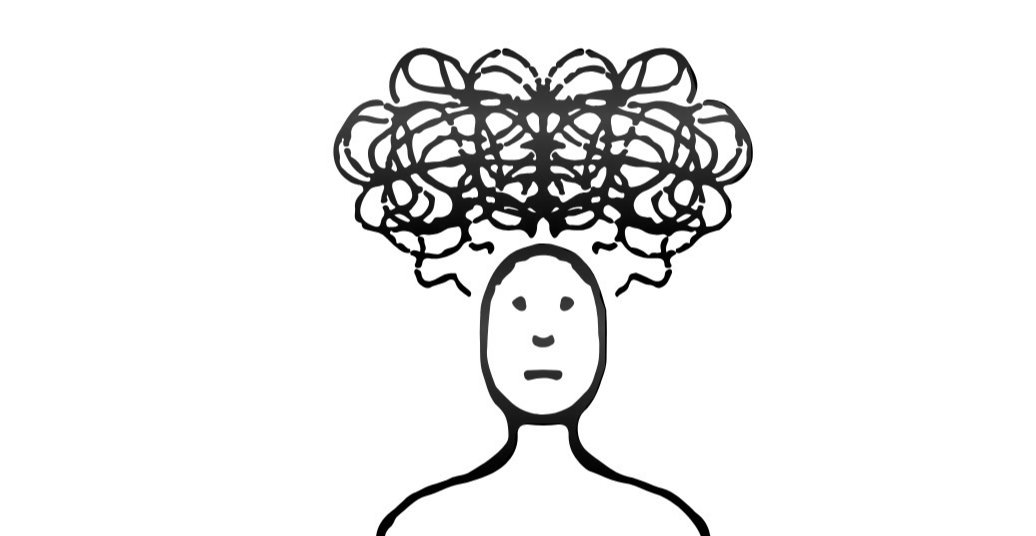
When people overthink, they usually aren't exploring new ideas. They're revisiting the same few ideas from different angles, hoping one of those angles will finally remove uncertainty. The conversation in their head changes slightly, but the destination stays the same.
The result is a strange kind of mental activity that feels productive without producing much. Hours can pass. Energy gets spent. Yet the decision, problem, or worry remains exactly where it started.
Overthinking doesn't necessarily make our conclusions more accurate, especially when confirmation bias is quietly shaping the information we pay attention to.
Overthinking isn't really an excess of thought. It's often a refusal to stop searching for certainty.
The Real Goal Isn't Better Thinking
Consider someone deciding whether to leave a stable job.
At first, the analysis is useful. They compare salaries, growth opportunities, financial risk, and long-term goals. That's what thinking is for.
But eventually they reach the edge of available information. From that point onward, additional thinking rarely creates additional clarity. Instead, it becomes an attempt to eliminate risk entirely.
That's where overthinking begins.
The person isn't asking, "What's the best decision based on what I know?" They're asking, "How can I guarantee I won't regret this?"
The second question has no answer.
Many important life decisions work this way. Choosing a career, moving to a new city, starting a business, ending a relationship, hiring an employee—these choices contain uncertainty that cannot be removed through analysis alone. At some point, reality becomes the only source of new information.
Yet people often continue thinking because uncertainty feels uncomfortable, and thinking creates the impression that progress is still being made.
Why Smart People Are Especially Vulnerable
There's a common belief that overthinking is caused by poor reasoning.
In practice, the opposite is often true.
People who are analytical tend to generate more possibilities. They see second-order effects, edge cases, and alternative outcomes that others might miss. This can be a genuine advantage when solving complex problems.
The downside is that every additional possibility creates another branch to evaluate.
A person considering a new opportunity may wonder whether it's the right move. An analytical person may wonder whether it's the right move, whether market conditions could change, whether a better opportunity will appear in six months, whether they're being influenced by short-term emotions, and whether their assumptions are biased in the first place.
The mind becomes exceptionally good at creating questions faster than it can answer them.
Ironically, the same intellectual habits that help people make better decisions can sometimes make decisions harder to make.
Overthinking Is Usually Emotional
One of the biggest misconceptions about overthinking is that it's primarily an intellectual problem.
Most of the time, it's emotional.
Think about someone replaying an awkward conversation from last week. They already know what happened. There is no hidden information waiting to be discovered. Yet they continue reviewing every sentence and facial expression as though a breakthrough is just around the corner.
What's happening isn't analysis. It's discomfort.
The brain treats thinking as a tool for resolving that discomfort, even when the discomfort comes from something that cannot be solved. Embarrassment, uncertainty, fear of failure, and fear of judgment often sit underneath the surface of excessive thinking.
This is one reason overthinking feels repetitive. If it were generating genuinely new insights, it would eventually conclude. Instead, it loops because the real objective isn't understanding. The objective is emotional relief.
Unfortunately, thoughts are often poor substitutes for acceptance.
The Internet Quietly Made This Worse
A generation ago, most decisions had practical limits.
If you wanted to buy a camera, choose a college, or learn a new skill, there were only so many opinions available. Eventually you had to decide.
Today, almost every decision can be researched indefinitely.
You can read hundreds of reviews, watch dozens of videos, compare endless alternatives, and consume contradictory advice from people who all sound equally confident. What begins as research can quickly become a form of procrastination disguised as diligence, which is why it's useful to understand why we procrastinate.
This is particularly visible in entrepreneurship and technology. Many aspiring founders spend months consuming startup content before building anything. Many beginners spend more time researching how to learn than actually learning.
The pattern is familiar because it feels responsible.
But there comes a point where another article, another video, or another comparison isn't reducing uncertainty. It's simply postponing action.
That's partly why ideas such as first principles thinking remain valuable. They force people to return to fundamentals instead of endlessly collecting opinions.
The Hidden Relationship Between Overthinking and Failure
Fear plays a larger role in overthinking than most people realize.
People often describe themselves as perfectionists, but perfectionism is frequently fear wearing a more respectable outfit. If a decision can be analyzed forever, it never has to be tested against reality.
The startup isn't launched.
The application isn't submitted.
The conversation isn't started.
The project remains safely hypothetical.
This connects closely to a broader pattern discussed in Why We Fear Failure More Than We Fear Being Wrong. Being wrong can be corrected. Failure feels public. It feels final, even when it isn't.
Overthinking becomes a defense mechanism. As long as we're still evaluating options, we haven't yet exposed ourselves to the possibility of disappointment.
The catch is that avoiding small failures often guarantees larger forms of stagnation.
Productive Thinking vs Circular Thinking
Not all deep thinking is bad.
Careful analysis prevents mistakes. Engineers think through failure modes. Investors evaluate risk. Founders consider market dynamics before committing resources. The goal isn't to become impulsive.
The useful distinction is between productive thinking and circular thinking.
Productive thinking moves you closer to action. Circular thinking keeps you trapped in evaluation.
A simple test helps identify the difference:
- Are you discovering genuinely new information?
- Are you refining your understanding of the problem?
- Are you identifying a concrete next step?
If the answer to all three is no, there's a good chance you're revisiting familiar territory.
Many people assume that more thinking automatically leads to better outcomes. In reality, the quality of thinking matters far more than the quantity.
This is one reason Prompt Engineering Isn't Magic. It's Mostly Clear Thinking. resonates beyond AI. Clear thinking isn't about generating more thoughts. It's about identifying the few thoughts that actually matter.
A Better Way Forward
The most effective decision-makers aren't people who eliminate uncertainty. They're people who develop a healthier relationship with it.
They gather information, think carefully, and acknowledge risks. Then they accept that some questions cannot be answered in advance.
When possible, they replace speculation with experiments. Instead of wondering whether an idea will work, they test it. Instead of endlessly evaluating a new skill, they start learning it. Instead of searching for the perfect plan, they create a small version of the plan and see what reality says.
That approach may seem less sophisticated than endless analysis.
It's usually more informative.
There's an interesting parallel with Why Consistency Beats Talent. Progress often comes from repeated interaction with reality rather than perfect preparation. The people who move forward aren't necessarily the ones with the best plans. They're often the ones willing to collect evidence through action.
Overthinking promises certainty before action. Life rarely offers that deal.
The people who make progress eventually discover something simpler: uncertainty isn't a problem to solve. It's the admission price for finding out what happens next.